2026-10-21 ·
Preventing Oven Igniter Failure During Frequent San Jose Temperature Swings
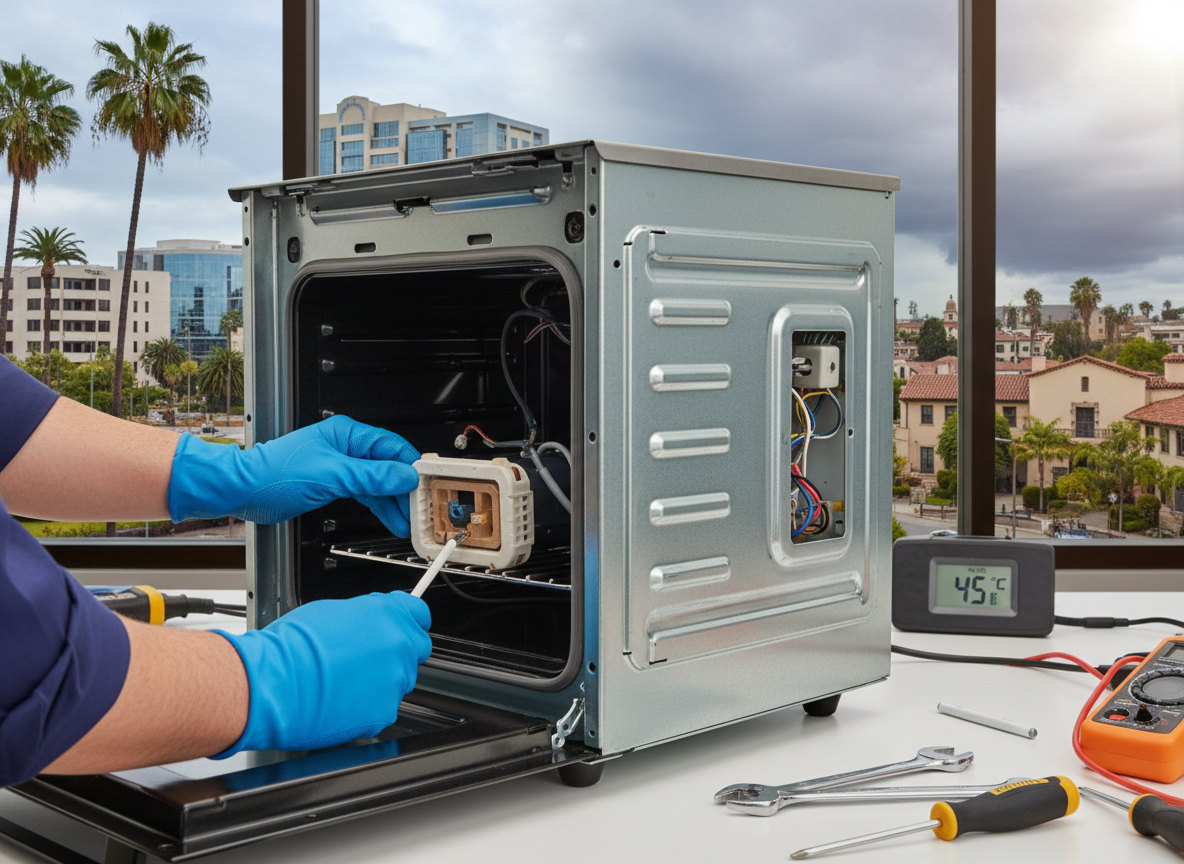
San Jose homeowners can extend oven igniter life by performing seasonal inspections and maintaining steady kitchen ventilation even when daytime highs reach the 80s and evenings drop into the 50s. These swings occur regularly across neighborhoods such as Willow Glen and Alum Rock because many ranch-style houses built before 1970 lack modern insulation around kitchens. The result is repeated expansion and contraction in the igniter element that shortens its typical 8–12 year span.
How San Jose Temperature Swings Stress Oven Igniters
San Jose sits in Santa Clara County with a mild Mediterranean climate that brings warm dry summers and noticeable evening cooling. In homes near the Tech Museum or along Alum Rock Avenue, kitchens often sit on the west side of the structure where afternoon sun heats the space quickly before night air arrives through older single-pane windows. This cycle causes the oven igniter to heat and cool faster than in more stable climates, leading to hairline cracks in the ceramic base after only five or six years. Nearby cities such as Campbell and Milpitas share the same pattern because the flat valley floor allows rapid heat loss once the sun sets. Older housing stock in Japantown and Evergreen adds another factor: limited attic insulation lets kitchen temperatures fluctuate more than in newer subdivisions. The igniter must then work harder during the first preheat cycle each morning to reach ignition temperature, accelerating wear on the 120-volt element.
Practical Checks Homeowners Can Perform
Walk around the oven after each major temperature drop and listen for a faint clicking that continues longer than 30 seconds before the burner lights. Check the igniter glow through the oven door vent during the first minute of a 350-degree cycle; a weak orange color instead of bright yellow signals early fatigue. In homes near San Jose City Hall or the Rosicrucian Egyptian Museum, where many kitchens face prevailing winds from the west, make sure range hood filters stay clean so moist air does not condense on the igniter when the unit cools overnight. Wipe the oven floor monthly to remove crumbs that can create hot spots and uneven heating around the igniter. These steps take less than ten minutes and directly address the expansion stress caused by San Jose's daily swings.
When Professional Oven Repair Becomes Necessary
If the igniter glows but the burner fails to light after three attempts, or if the element shows visible cracks, schedule service rather than continuing use. A technician can test resistance with a multimeter and confirm whether the igniter draws the proper 3.2–3.6 amps under load. In older Cambrian and Almaden Valley homes, technicians often find that the original wiring has become brittle from repeated heating cycles, requiring replacement at the same time. Oven repair addresses these issues before a failed igniter leaves the household without a working range during a heat wave. Readers dealing with related appliance stress in similar older stock may also find value in replacing a dryer heating element in older San Jose ranch-style homes.
Long-Term Prevention in Santa Clara County Kitchens
Install a simple oven thermometer and avoid setting temperatures more than 50 degrees above the target on the first preheat when evening temperatures have already dropped. Keep at least six inches of clearance around the range so air can circulate and equalize temperature more gradually. In neighborhoods such as Downtown San Jose where many kitchens sit in compact floor plans, running the range hood for five minutes after baking helps remove residual heat before the oven cools. These habits reduce the number of full thermal cycles the igniter experiences each week. When combined with the visual inspections described earlier, they allow the component to reach its full expected lifespan even in San Jose's variable conditions.